International Scientific Conference: THE MILLENNIAL RADIANCE OF ST. CLEMENT OF OHRID
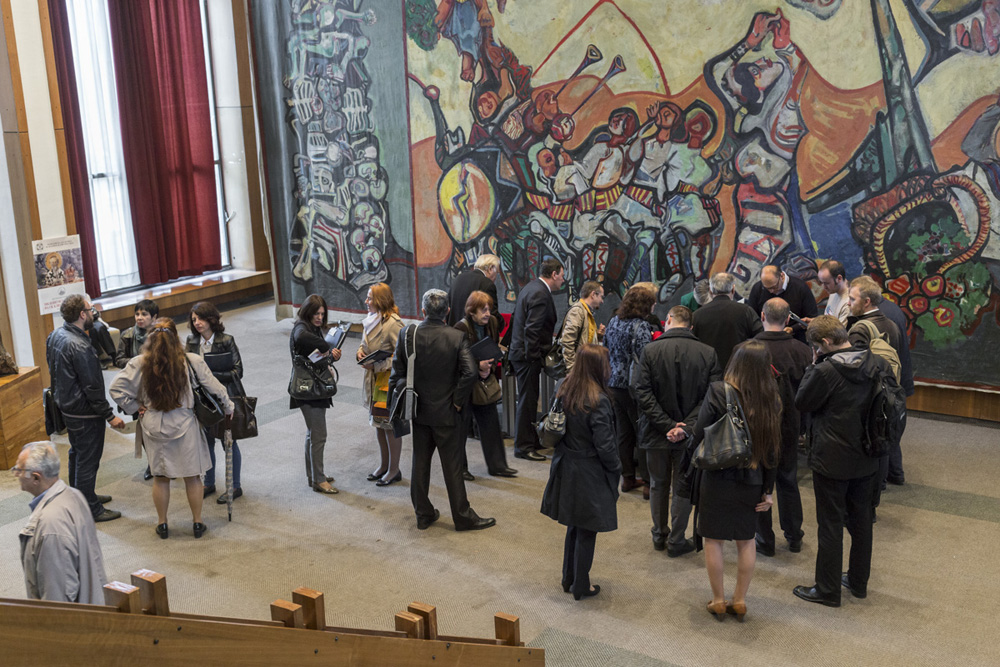
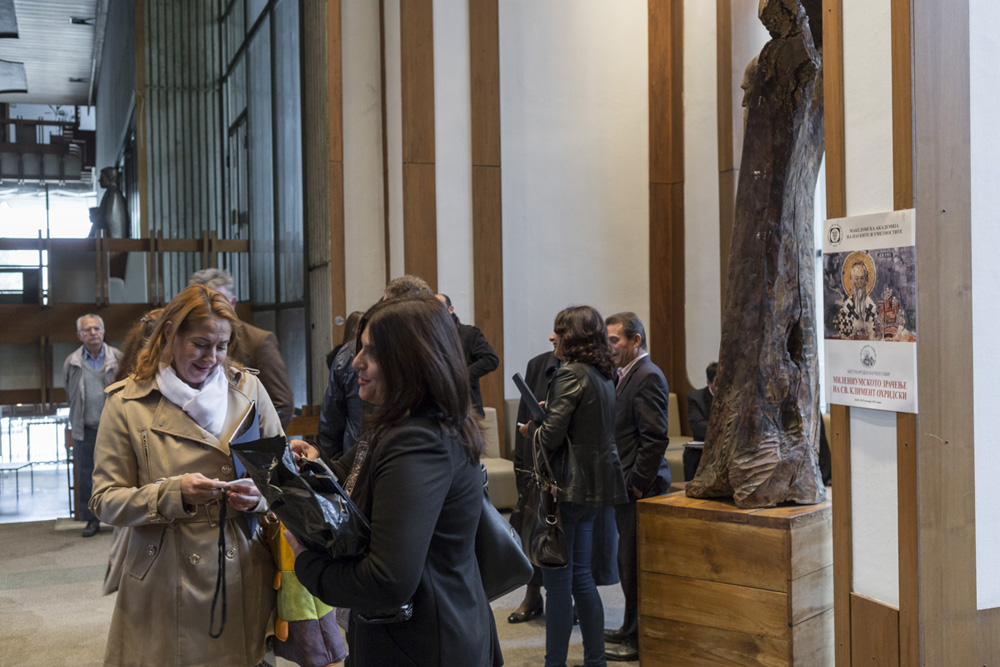
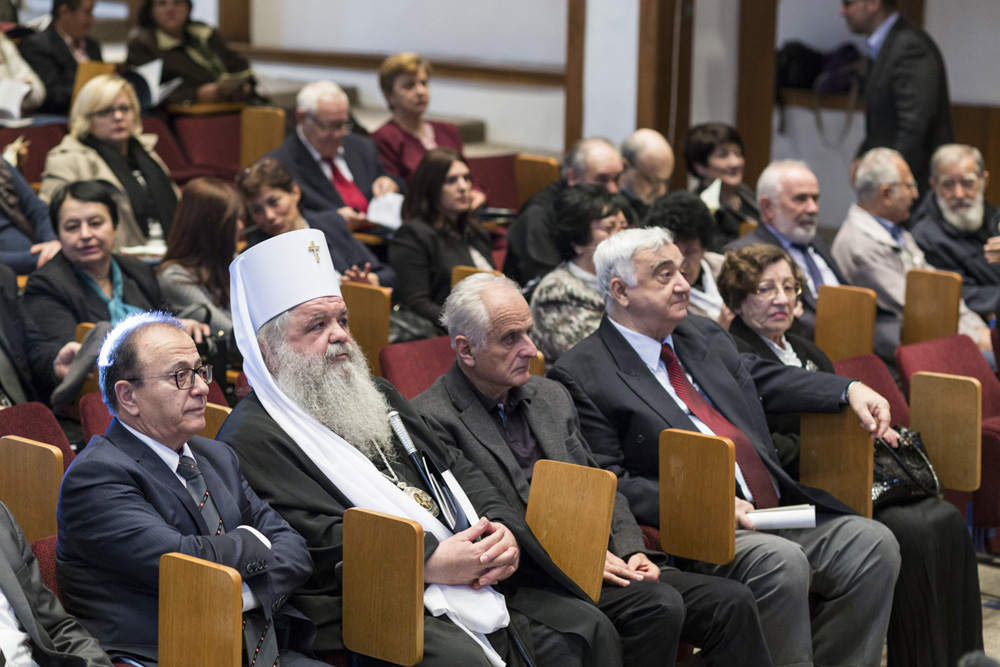
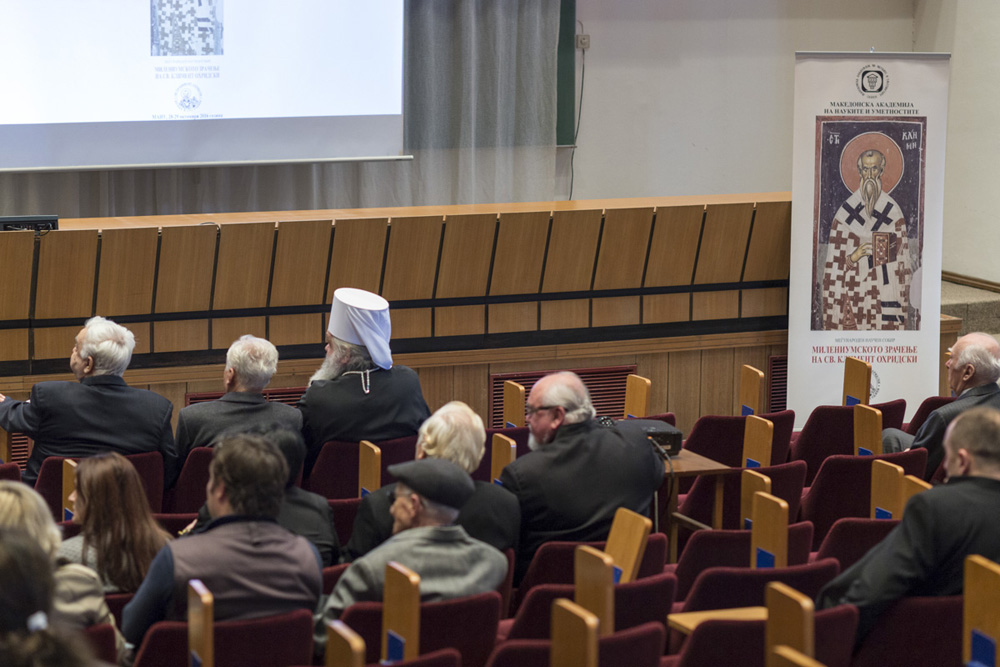
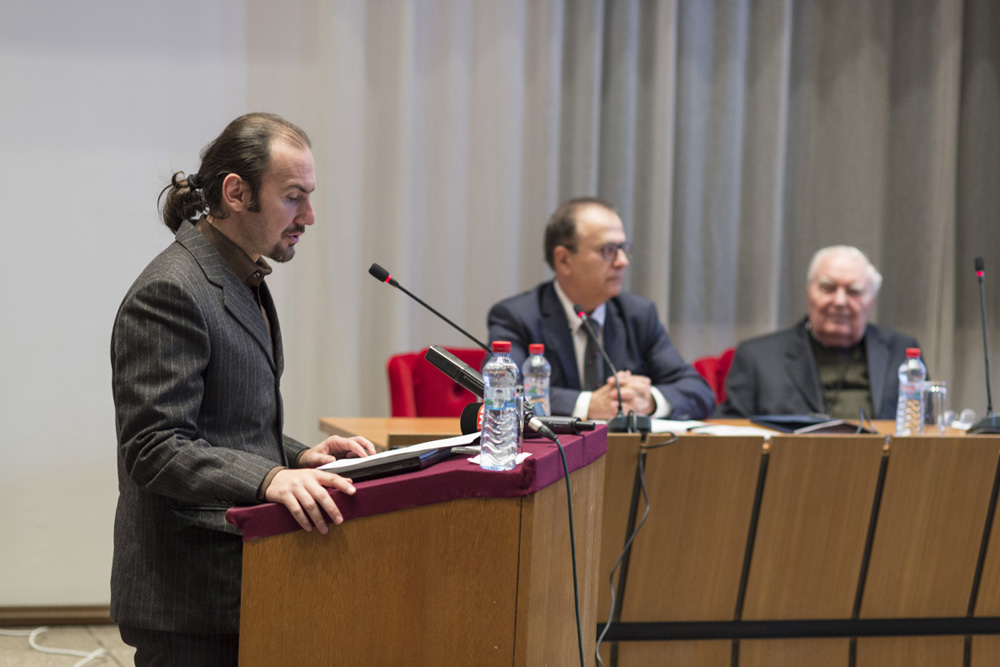
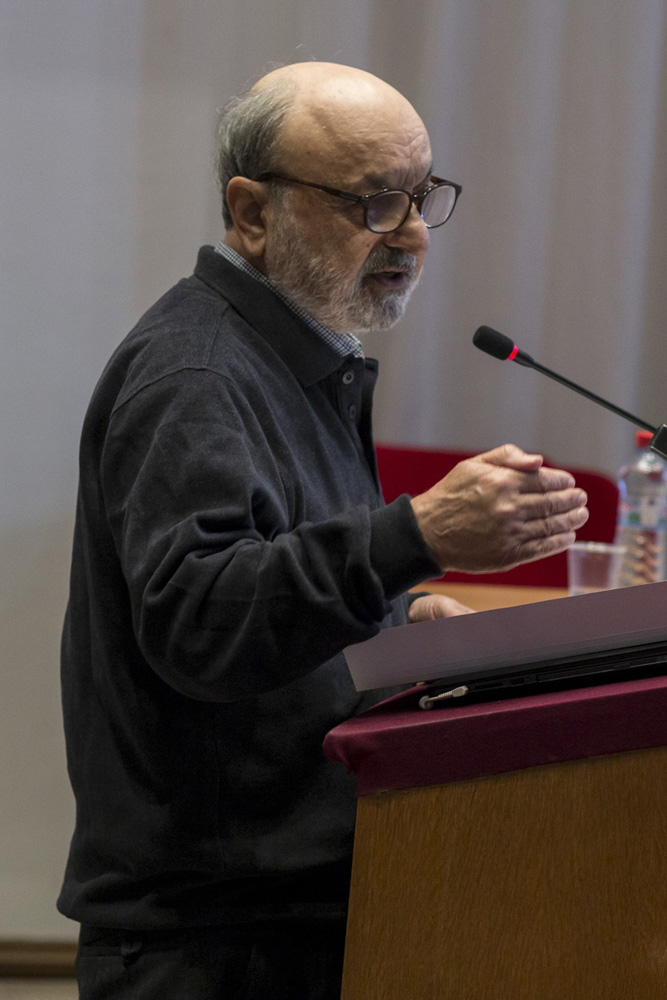
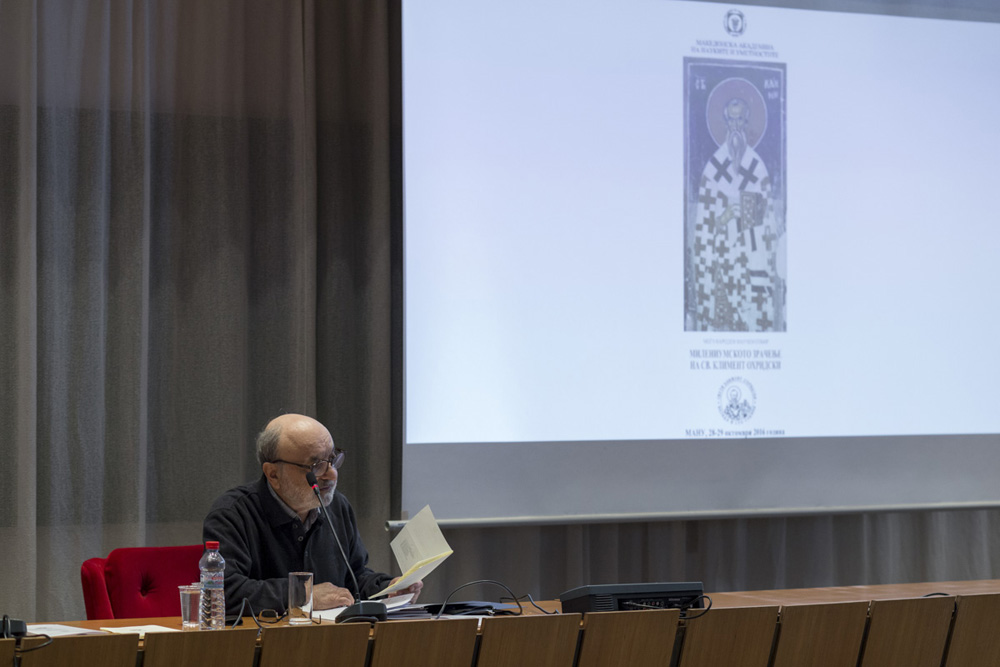
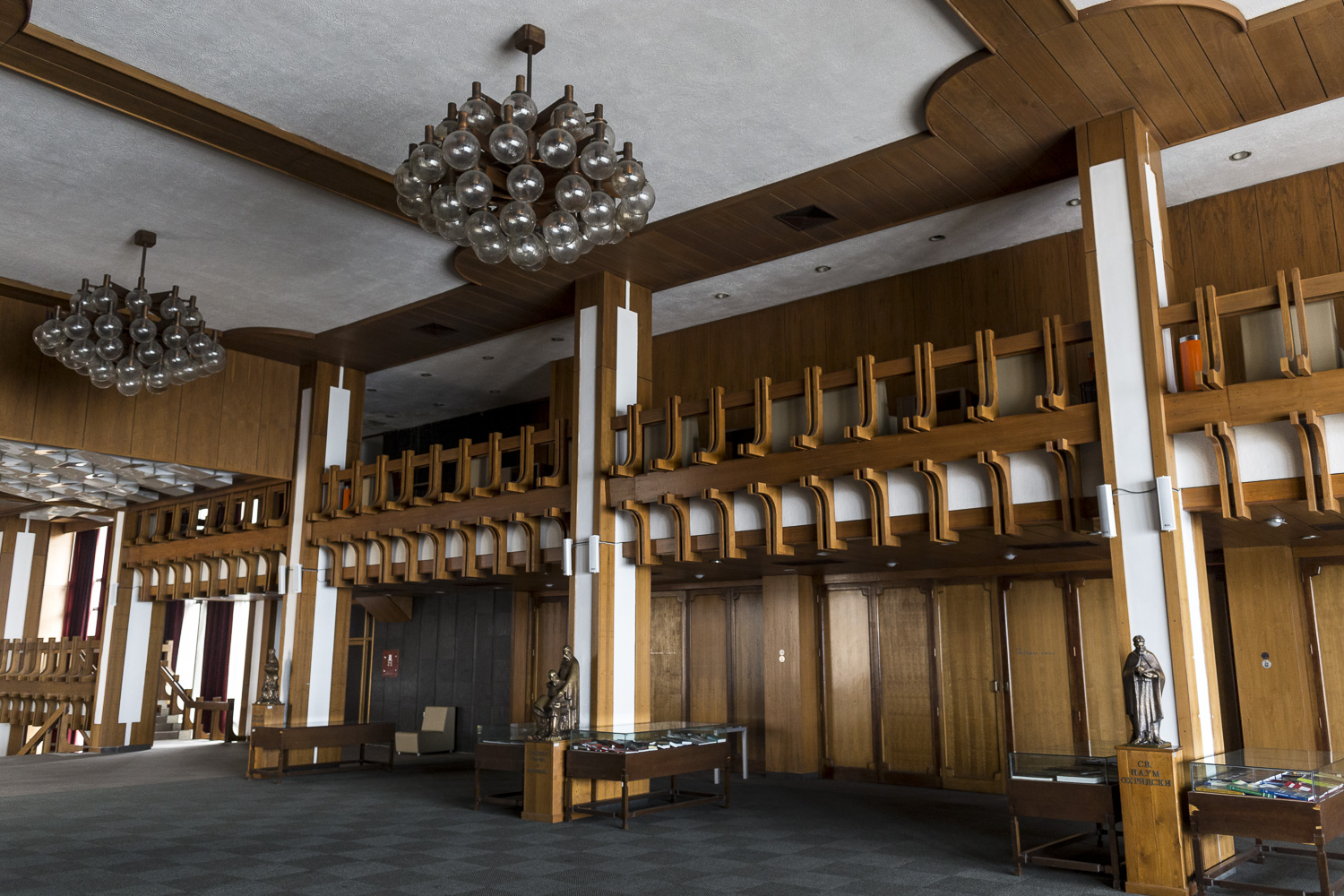
Organized by the Macedonian Academy of Sciences and Arts, the International Scientific Conference “The Millennial Radiance of St. Clement of Ohrid” was held at MASA on 28 and 29 October 2016. On 28 October, the First Working Session was held on the topic: „Literature, Language and Literary Studies“, and on 29 October the Second Working Session was held on the topic: „History, Theology, Archaeology and Art History“. The scientific conference brought together a large number of researchers from the Republic of Macedonia, as well as eminent scholars from the Russian Federation, the Czech Republic, the Slovak Republic, Ukraine, the Republic of Lithuania and the Republic of Bulgaria.
A total of 45 participants registered for the scientific conference and submitted abstracts that were included in the programme, 11 of them from abroad and the remainder from Macedonia. The proposed topics and submitted abstracts were printed in a separate book of abstracts. The conference was organized into sections: Literature, Language and Literary Studies; History; Theology; Archaeology; and Art History.
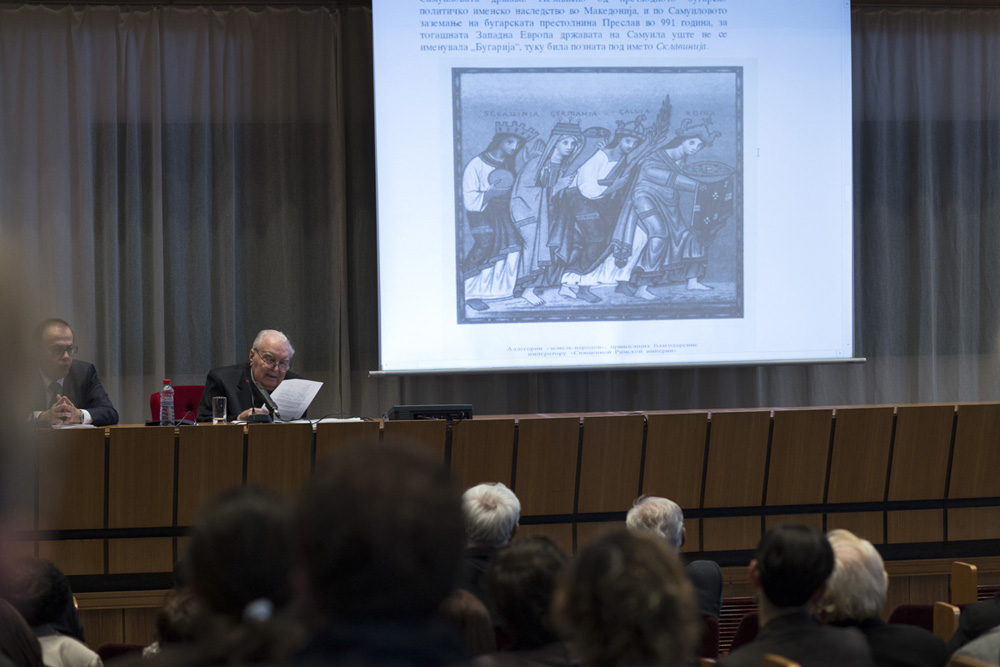
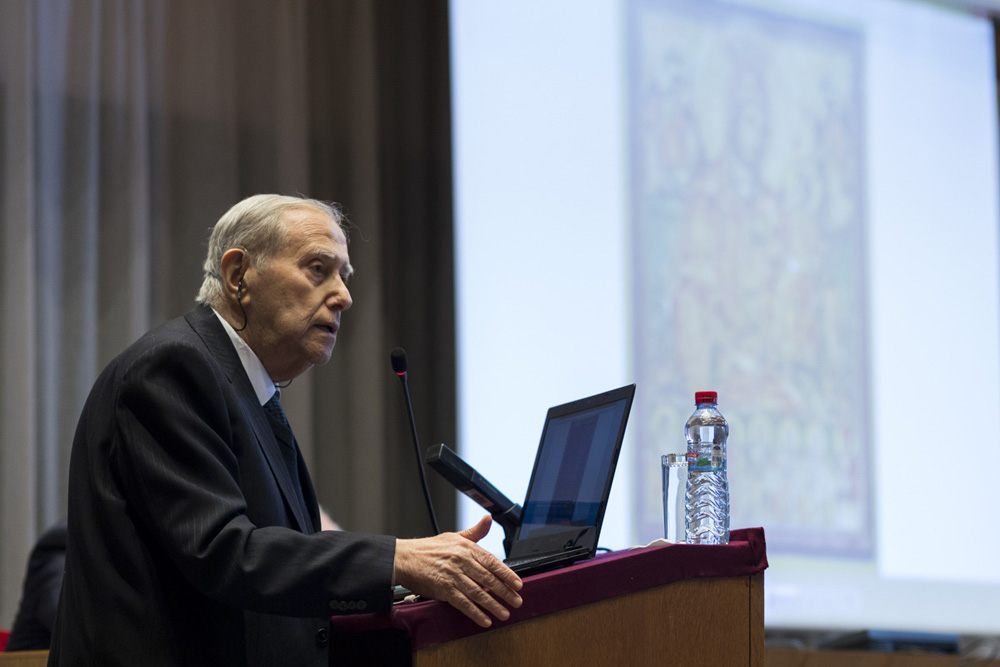
The scientific conference was welcomed with addresses by Acad. Taki Fiti, President of the Macedonian Academy of Sciences and Arts, while the welcome address of the President of the Republic of Macedonia, Dr. Gjorge Ivanov, was read to those present. The working part of the conference began with plenary presentations by Acad. Georgi Stardelov: In the Beginning Was the Word; Acad. Blazhe Ristovski: The Name of the Language and Script of St. Clement and the Ethnonym of the Slavs; Acad. Cvetan Grozdanov: New Findings on the Monastery of St. Clement at Plaoshnik.
The conference then continued according to the scheduled programme in several sections. Literature, Language and Literary Studies, First Session: Acad. Gjorgi Pop-Atanasov: St. Clement of Ohrid, “Moravia Magna and Slavia Orthodoxa”; (Prague, Czech Republic) Clementine Traditions in the Language of Texts of the Macedonian Recension; Emilija Crvenkovska: On a Possible Reconstruction of the “Clement Corpus”; Sergejus Yu. Temčinas (Vilnius, Republic of Lithuania) Did St. Clement of Ohrid Compose Common Offices? ; Roman Krivko (Moscow, Russian Federation) Regional Variation in Old Church Slavonic: The South-Western Balkan Area; Maria Yovcheva (Sofia, Republic of Bulgaria) Archaic features and innovations in the language of the Octoechos canons of St. Clement of Ohrid; Viktoriia Volodymyrivna Horeva (Kyiv, Ukraine)
Ukrainian scholars and Ukrainian-studies issues at the First International Congress of Slavic Philologists (Prague, 1929). In the second session, the following presented: Vera Stojchevska-Antikj The Ohrid Literary Centre and the manuscript heritage; Dimitar Pandev The literary work of St. Clement of Ohrid in the context of the new literary languages and literatures; Dobrila Milovska An archaeographic survey of the manuscript copies of the Long Life of St. Cyril the Philosopher; Krasimira Ilievska In Praise of the Teachers; Ilija Velev Hymnographic compositions dedicated to St. Clement of Ohrid in the liturgical and literary tradition; Liljana Makarijoska The Argirov Triodion and its place among the manuscripts of the Ohrid Literary School; Maja Jakimovska-Toshikj Clement's literary works dedicated to the first teachers, Saints Cyril and Methodius; Valentina Mironska-Hristovska The Clementine tradition in the Macedonian nineteenth century.
In the section on history the following participated: Aleksandar Atanasovski St. Clement of Ohrid and the European dimension of his work; Jovan Belchovski On the location of St. Clement's diocese; Peter Ivanič and Martin Hetényi (Nitra, Slovenská republika) St. Clement of Ohrid in the context of modern Slovak and Czech historiography; Boban Petrovski St. Clement's Slavic bishopric vs. the so-called Preslav civilization; Toni Filipovski 27 July (9 August) 916: the date of the death or burial of St. Clement of Ohrid; Martin Husár and MartinaŠkutová (Nitra, Slovenská republika) Greek communities in Rome and the Cyrillo-Methodius Mission; Mitko B. Panov St. Clement of Ohrid in the works of Theophylact and Chomatenos: historical reconstruction and contextualization of Byzantine ideology; Stojko Stojkov (Blagoevgrad, Republic of Bulgaria)
Saint Clement: bishop of the Slavo nic/επισκόπου Βουλγαρίας; Stojan Risteski Following the path of the Apostle Paul: where did St. Clement arrive in Kutmichevitsa?; Dragan Gjalevski Some observations on the activity of St. Clement of Ohrid in Macedonia; Dragan Zajkovski The Lives of St. Clement as historical sources: a new look at an old problem; Eli Lucheska In search of the relics of St. Clement of Ohrid; Mihailo Georgievski Macedonian codices as a reflection of Christian patronage, with special reference to the Struga codex, i.e. the chronicle book of the Church of St. George in Struga from 1835–1913; Vasil Gjorgjiev–Likin St. Clement of Ohrid and the Cyrillo-Methodian tradition in Strumica and the Strumica region – permeation and continuity.
In the section on theology the following participated: Ratomir Grozdanoski
The biblical name of St. Clement of Ohrid; Gjoko Gjorgjevski The biblical view of justice and righteousness in the works of St. Clement of Ohrid; Aco Girevski Homiletic and practical observations on the teachings, praises and homilies of St. Clement of Ohrid; Viktor NedeskiThe historical and theological basis for the suffering of St. Clement of Ohrid and his companions in Moravia.
In the section on archaeology and art history the following participated: Elica Maneva Reflections of St. Clement's educational mission in the Skopje region; Branislav Risteski The work of St. Clement of Ohrid and the monastic settlement from the late ninth and early tenth century to the mid-fifteenth century at the site of the Holy Transfiguration near the village of Zrze; Ljubinka Dzhidrova The era of the Macedonian educators through archaeological and historical evidence; Igor Galevski and Antonio Jakimovski Glagolitic letters incised on medieval pottery from Scupi; Aksinia Dzhurova (Sofia, Republic of Bulgaria) On the question of the iconography of St. Clement of Ohrid; Ralitsa Ruseva (Sofia, Republic of Bulgaria) The presence of St. Clement in the Dormition of St. Naum scene; Sasho Cvetkovski Portraits of St. Clement of Ohrid in the works of the Debar-Mijak icon painters; Elizabeta Kasapova The additions to St. Clement's Church at Plaoshnik as a response to contemporary trends in Late Byzantine architecture; Angelina Popovska Conservation observations on a little-known icon of St. Clement from the Ohrid collection.