Acad. Marjan Marković
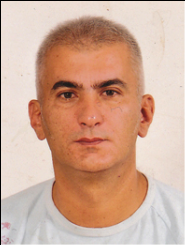
Full Member
Acad. Marjan Marković
Биографија
Corresponding Member Marjan Marković is a linguist specializing in Macedonian studies, Slavic studies and Balkan studies. His scholarly interests focus on the study of the Macedonian dialectal and standard language, past and present, in both Slavic and Balkan contexts.
Corresponding Member Marjan Marković was born in Skopje on 7 February 1967. He completed his secondary education at the Josip Broz Gymnasium. In 1987 he enrolled at the Blaze Koneski Faculty of Philology at Ss. Cyril and Methodius University, graduating in 1991 with the degree of graduate philologist in Macedonian language with Polish language and literature. In 1995 he defended his master's thesis, "The Macedonian and Aromanian Verbal Systems in the Dialects of the Ohrid-Struga Region", under the mentorship of Acad. Božidar Vidoeski. In 2000 he defended his doctoral dissertation, "The Speech of the Farsherot Aromanians in the Ohrid-Struga Region (in a Balkan Context)", under the mentorship of Prof. Dr. Victor Friedman. The dissertation was published by MASA in 2007.
Corresponding Member Marjan Marković has been involved in MASA's linguistic projects for more than 20 years. In 1991, immediately after his graduation, Acad. Vidoeski involved him in the International Linguistic Atlases project, which includes the General Slavic Linguistic Atlas (OLA), a project of the International Committee of Slavists (ICS), Atlas Linguarum Europae (ALE), and at that time also included the now completed General Carpathian Dialect Atlas (GCDA). From January 1992 to September 1995, Marković worked on these projects as a scholarship holder of the Ministry of Education and Science, and from September 1995 he became a permanent external associate of MASA on the International Linguistic Atlases project. From 2004 to 2007 he headed the project.
Today, Corresponding Member Marković is Macedonia's official representative on the OLA International Commission of the ICS and heads the Macedonian working group within that Commission. He is responsible not only for interpreting and presenting Macedonian linguistic material on the Atlas maps, but also actively participates in developing and further refining the Atlas's conceptual framework. He is also Macedonia's representative on the international ALE commission.
In 1998, following the death of Acad. Božidar Vidoeski, Corresponding Member Marković, together with Acad. Zuzanna Topolińska and Prof. Dr. Victor Friedman, co-authored the initiative to establish the Research Center for Areal Linguistics at MASA. Since 2000, the year the Center was established, he has also been active in the project The Place of the Macedonian Language in the Slavic and Balkan Linguistic World. On his initiative and according to his concept, the Center's activities were expanded: a Digital Archive of the Macedonian Language, a Digital Database of Macedonian Dialects (a type of digital dialect dictionary), and a Digital Collection of Texts from Macedonian Dialects (interactive map) were established, thereby expanding electronic publishing alongside traditional publishing. For the past two years, by decision of the MASA Presidency, Corresponding Member Marković has officially served as coordinator of the Center's projects. In 1995 he joined the Blaze Koneski Faculty of Philology at Ss. Cyril and Methodius University, where he is now Full Professor of Macedonian Dialectology, Balkan Linguistics and Contemporary Macedonian Language. In 2003–2004 he served as Vice-Dean for Academic Affairs, and in 2008–2009 as Vice-Dean for International Cooperation. In 2013 he received the Ss. Cyril and Methodius University award for Best Scientist for 2012.
In his individual scholarly work, Corresponding Member Marković showed an interest from the outset in several lines of linguistic research: (1) the organization of space in Macedonian dialectal and standard language; (2) the history of the Macedonian verbal system in a Balkan context: the formal and semantic evolution of the system, particularly the semantic and grammatical categories of ASPECT and TENSE; and (3) the etymology and analysis of semantic motivation of individual lexemes in selected segments of the Macedonian lexicon. His creativity, linguistic intuition, and practical and theoretical knowledge of Slavic and Balkan languages enabled him to build upon and develop existing scholarship in all these areas. Most of his linguistic studies are analytical in character, address clearly defined topics, and present their results clearly;
Corresponding Member Marković's bibliography comprises more than 70 published items, in addition to more than ten texts submitted for publication in prominent and refereed journals. His published scholarly studies may be grouped as follows: publications devoted to the mechanisms for determining the static location of objects, on which dynamic spatial information can be built; studies of Macedonian-Aromanian contact-induced changes in the verbal system; Marković's contribution to identifying and providing a convincing, well-argued explanation of the phenomenon known as "preposition doubling"; several university manuals on Macedonian dialectology; several secondary-school manuals on Macedonian language and literature prepared on the basis of existing professional literature; and maps for the General Slavic Linguistic Atlas, involving thorough interpretation, established etymology and morphological analysis of several hundred lexemes recorded in 850 settlements throughout the Slavic linguistic territory, which testifies to the author's broad linguistic and Slavic-studies training. His new book Spatial Relations in the Macedonian Language (in a Balkan Context) is also in press at MASA.
His strong command of major languages—English, German and Russian—together with numerous studies published in well-known journals and active participation in many scholarly conferences at home and abroad, has secured Corresponding Member Marjan Marković extensive contacts and a high standing in international linguistic circles. He is frequently invited to represent the Republic of Macedonia and the Macedonian language in international projects, including Evolution of Semantic Systems – EOSS at the Max Planck Institute for Psycholinguistics in Nijmegen, the Netherlands, among others. His command of several languages enables him to follow new professional literature regularly, keep abreast of new trends in world linguistics, and participate in scholarly discussion with both established and new colleagues abroad—linguists, Slavists and Balkanologists.
Of great importance to the Macedonian linguistic community is Corresponding Member Marković's didactic and pedagogical work, including his ability to organize teamwork through training, education and workshops. He knows how to engage students, establish personal contact with them, and convince them of the deeper purpose of what is required during their studies and in their involvement in the projects of the Božidar Vidoeski Research Center for Areal Linguistics. On his initiative, student volunteers are continuously present at the Center, where they not only assist in carrying out its scholarly activities but also learn practical linguistic work, the application of IT technologies, and related skills. His lectures are always well attended, while his presentations at scholarly conferences stimulate discussion and often lead to new research initiatives.
He was elected a corresponding member of the Macedonian Academy of Sciences and Arts, Department of Linguistics and Literary Science, in 2015.
He was elected a full member of the Macedonian Academy of Sciences and Arts in 2022.