Acad. Gligor Kanevče
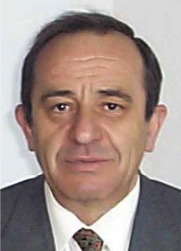
Full Member, 2000
Acad. Gligor Kanevče
Биографија
Acad. Gligor Kanevče was born on 3 January 1946 in Ohrid. He graduated from the Faculty of Mechanical Engineering in Belgrade in 1969 and earned his doctorate from the Faculty of Technology in Novi Sad in 1982. He worked at the “Boris Kidrič – Vinča” Institute from 1970 to 1983 and as an Assistant at the Faculty of Mechanical Engineering in Belgrade from 1975 to 1980. From 1983 until his retirement in 2011 he was employed at the Technical Faculty in Bitola, where he taught the undergraduate courses Thermodynamics, Sustainable Energy Development, Energy and Environment, Nuclear Reactors, and Industrial Dryers, and the postgraduate courses Heat and Mass Transfer, Combustion Processes and Heat and Mass Transfer in Energy Plants, Dryers, and Air Pollution. He has held the rank of Full Professor since 1989. In 2013 he was elected the first Professor Emeritus of St. Clement of Ohrid University in Bitola. From 1995 to 1997 he served as Dean of the Faculty. From 2007 to 2013 he was President of the Macedonian National Committee of the World Energy Council, and since 2012 he has headed the Research Center for Energy and Sustainable Development at the Macedonian Academy of Sciences and Arts.
Acad. Kanevče has published more than 200 scientific and professional papers in the country and abroad in the fields of energy, environment, thermal engineering, thermal power engineering, process engineering, and measurement technology. His scientific and applied work is strongly multidisciplinary and, according to its dominant contributions, may be divided into several principal areas: drying theory, drying systems, measurement methods, fluidized beds and heat-treatment furnaces, ablation processes, and environmental modeling. His scientific work has addressed the following problems: measurement of velocity and temperature fluctuations in turbulent flows using statistical signal processing; investigation of the thermodynamic and flow characteristics of thermal units, dryers, and other thermal-engineering equipment and the development of appropriate measurement methods and facilities; experimental and theoretical investigation of heat and mass transfer processes in colloidal capillary-porous bodies; development of heat-treatment furnaces with fluidized beds; development of systems for lignite utilization and lignite dryers; development of mathematical models for calculating the temperature and velocity fields of condenser cooling-water discharges at power plants; study of heat and mass transfer processes in high-temperature, high-velocity gas flows that lead to wall ablation; development of physical and mathematical models of scrubber installations; and mathematical modeling of pollutant dispersion from the stacks of thermal power facilities.
Acad. Kanevče’s scientific work combines theoretical and experimental research. To carry out his experiments, he developed numerous experimental apparatuses with appropriate measurement systems. A large number of experiments were also conducted on full-scale facilities. The experimental results were incorporated into the development of corresponding physical and mathematical models. His extensive scientific work extends into fundamental research in several areas. Of particular importance are the results of his theoretical and experimental investigations of drying processes.
A large number of Acad. Kanevče’s papers have direct practical applications. His work includes the development of measurement methods and systems for measuring temperature, humidity, velocity, and flow rates in industrial installations. The measurement methods he developed for physical quantities of importance in thermal engineering have broad applications. Particularly noteworthy are his studies of drying systems, whose results have been implemented in numerous dryers of various types and purposes. Acad. Kanevče has made a special contribution to improving the family of vertical dryers for granular products and to improving and expanding the application of rotorpneumatic dryers.
Acad. Kanevče has initiated, led, and participated in a large number of scientific research and applied projects and has developed extensive international cooperation.
Research in the field of fluidized beds resulted in the construction of an industrial heat-treatment furnace. Studies of convective chamber furnaces for heat treatment resulted in a conceptual design for a furnace with a homogeneous temperature field. His work in the field of ecology has direct practical value. The MADAM software package was developed for the needs of environmental legislation in Macedonia and is used in preparing environmental studies for modeling the dispersion of pollutants from the stacks of thermal power facilities. Over the last decade, through the Research Center for Energy and Sustainable Development at the Macedonian Academy of Sciences and Arts, Acad. Kanevče has worked on strategic projects of national importance and vital significance to the country in the field of energy and its environmental impact,
Acad. Kanevče’s scientific work contains major theoretical, experimental, and applied achievements, recognized in the country and abroad and verified in industrial practice. His pioneering role in organizing scientific research, doctoral and master’s studies, and in developing young scientific staff at the University of Bitola is also notable.
He is a member of international and national scientific councils, committees and societies, as well as editorial and organizing boards of journals and symposia.
He was elected a Full Member of the Macedonian Academy of Sciences and Arts on 10 May 2000. More information can be found on the
website.